
The Ultimate Guide To SEO For Businesses In Malaysia (2026)
As SEO isn’t exactly exciting, the fact you clicked into this guide means you’re probably a business owner in Malaysia who is either:
- not fully sure of what SEO is but curious if it can help your business, or
- aware of what it is and its value but unsure how to implement it
This guide addresses both groups, and first, let us address an elephant in the room – what the heck would a Company Secretary like MISHU know about SEO?
From day one, SEO has been a key part of how MISHU hustles to be seen by customers online.
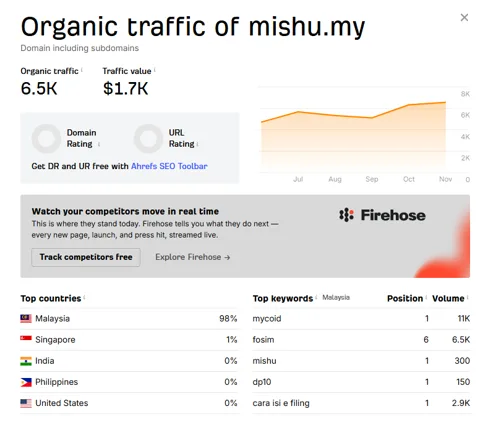
Six years later, we think we’ve gotten decent enough to share our thoughts on it – Ahrefs snapshots of MISHU’s organic traffic usually compares quite well to local competitors.
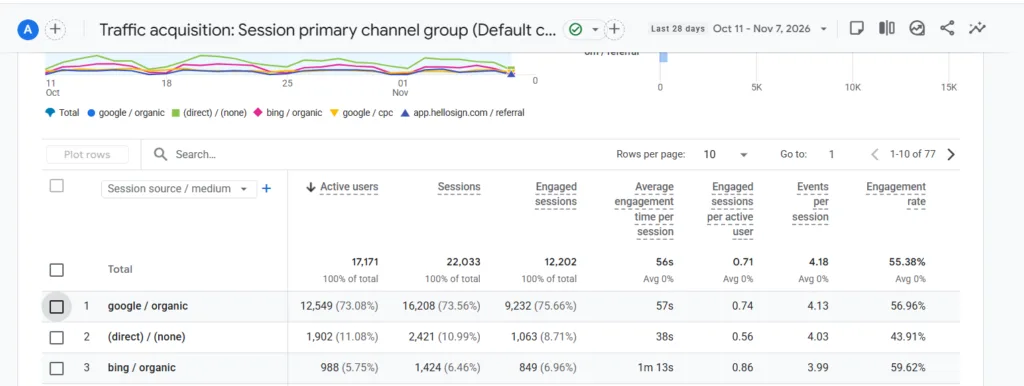
On top of that, you probably found this guide via search engine or LLM recommendation!
Feel free to skip to the how-tos if you’re already familiar with SEO, but if this is a new topic, we recommend reading from top to bottom so you can fully understand the later sections.
As we are distilling six years’ worth of experience into one post, it’s not exactly light reading.
We cover fundamental concepts and assumptions, but this is not a technical dissection – the focus is turning our understanding and observations into action items for a business in Malaysia to use SEO effectively without having to rely on an agency.
Let’s begin.
Table of Contents
- What is SEO?
- SEO vs paid ads vs social media
- How search engines decide who to recommend
- SEO is relevance + authority
- Establishing page relevance for SEO
- Establishing authority for SEO
- How to do SEO for your business
- Don’t sweat technical SEO
- Do proper keyword research & understand your industry
- Run your keywords past the sales team
- Keep keywords in titles and headings simple
- Give subtopics a dedicated page when it makes sense
- Target location-specific searches (local SEO)
- Google Business Profile optimisation (also local SEO)
- Write in the languages your customers search in
- Prioritise bottom-of-funnel keywords
- Consider dedicated sister sites
- Partner with businesses and SEO practitioners
- Social media can help with SEO
- Don’t ignore Bing Webmaster Tools
- Don’t overlook image search
- Use a paid AI plan
- Track results by leads and conversions
- What about AI search?
- Our final note: Always test things yourself!
- Let MISHU be your Company Secretary
What is SEO?
SEO is the work of getting a page on your website as high up as possible on the first page of a search engine, whenever someone searches for something relevant to your business.
Notice we said page, not website, because search engines rank pages, not websites.
Notice we also said search engine and not Google, because believe it or not, a decent percentage of Malaysians still use other search engines.
Anyways, search engines like Google and AI apps like ChatGPT are just giant middlemen.
People ask them for stuff and they recommend whoever they think has the best answer.
SEO is making sure that whoever is your webpage.
Whether that helps your business is your call, but we can help you decide.
Can SEO help your business?
SEO is just another traffic channel, same as paid ads or social media. Businesses market and advertise where they think or know their customers are.
So ask yourself if your customers use search engines to find the services you provide.
The more you know your target customer, the better you can answer this.
If they’re not, then it’s not going to give you a return on investment. We believe that some customer segments are genuinely best approached and converted in-person.
That said, search engines and AI tools are so ingrained in our lives that your customers probably do use them.
Google your own services the way a customer might – if your competitors pop up, people are likely searching, and you are missing out on potential leads.
Of course, SEO isn’t the only way to market online, so let’s compare it to the other two big ones.
SEO vs paid ads vs social media
This goes beyond the scope of this guide but it’s important you understand SEO is no miracle.
It’s just a digital marketing channel that sits alongside its two siblings paid ads and social media.
For most businesses, all three are viable traffic channels, each with different pros and cons, and that’s what decides how much time and money each one deserves.
Here’s how we’d sum them up:
| SEO | Paid ads | Social media | |
| Cost | mostly your time and content, and you never pay per click | you pay for every click, and the more competitive your industry, the more it costs | free to post, but don’t expect much reach unless you pay to boost |
| Speed to results | slow, as pages usually take months to rank | fast, as traffic starts the day your campaign goes live | hit or miss, as a post can take off overnight or go nowhere |
| How long results last | years, since a page that ranks keeps bringing in traffic | until you stop paying | a few days, before your post disappears from people’s feeds |
| Buying intent | high, since people are actively looking for what you offer | high for search ads, lower for display ads | lower, since people are scrolling, not shopping |
| Control | low, since search engines decide who ranks and change the rules whenever they like | high, since you pick the keywords, budget and audience | somewhere in between, since you decide what to post but the platform decides who sees it |
| Scalability | grows as you publish more pages and earn more backlinks | grows instantly with your budget, but so do your costs | grows with your following, which takes consistent effort |
| Trust | high, as plenty of people trust organic results over ads | lower, as plenty of people scroll straight past anything labelled ‘sponsored’ | great for familiarity and personality, but rarely closes a sale on its own |
| Best for | steady leads over the long run at a lower cost per lead | quick leads, launches and testing which keywords bring in good leads | brand awareness, building a community and staying top of mind |
In summary:
- SEO is slow to get going but usually works out cheapest per lead in the long run
- ads are fast but stop the second you stop paying, and
- social media is great to create awareness among people who aren’t yet ready to buy
We’ve noticed that many SMEs in Malaysia have a bad habit of only focusing on social media marketing due to the owner’s own – forgive us – lack of awareness.
A more informed business might understand the value of search engines, but only do ads, thereby limiting themselves to paying for every click forever.
And by far the most neglected is SEO, despite the fact done right it offers the best long-term ROI hands down.
An example of SEO’s long-term payoff
Our guide on how to open a tuition centre in Malaysia was written before AI tools were a thing. It took marketing about a week to manually research and prepare the first draft.
Then it was checked by our license team…then the marketing team had to edit it some more!
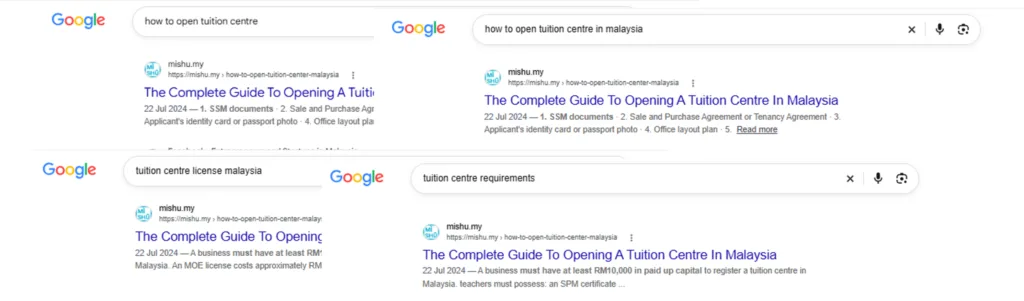
Since publishing it years ago, it has sat at #1 on Google for almost every version of opening a tuition centre that we can think of, and has easily brought in hundreds of leads.
We haven’t spent a single sen on ads for it, and we’ll never have to.
All our guides work like this and by now we have hundreds of blogs steadily bringing in traffic.
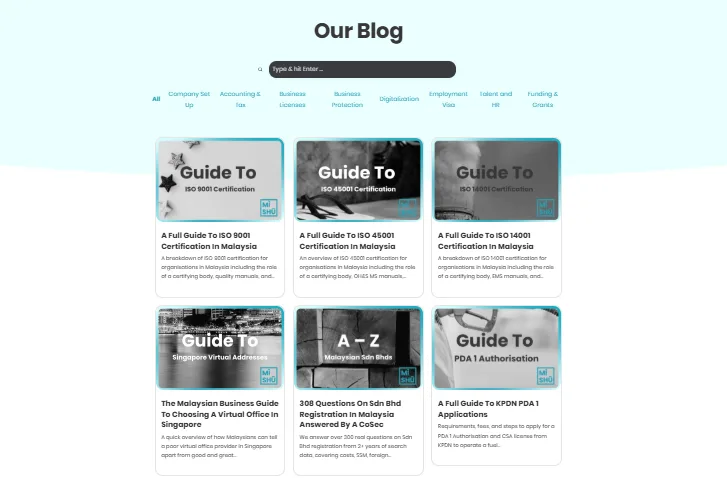
We’re not special – this is just how SEO works. Once a page ranks, it keeps bringing in visitors and leads for a long time after you’ve finished writing it.
If we’d paid for all that traffic through ads, every click would’ve cost us, and the leads would’ve dried up the day we stopped paying.
Via social media, it would mean constant posting and praying it gets shown to the right eyes.
Instead, as a source of organic leads, it just sits there and pulls in leads for us – but we had to put in work to write it in the first place. We do make sure to continuously update it when necessary, such as the recent change in Bumiputera equity requirements.
If this is something you can commit to, let’s cover the basics of how search engines operate.
How search engines decide who to recommend
If you asked a friend to recommend an accountant, they’d probably:
- Think of people they know who actually do accounting, then
- Pick the one they trust most
Search engines do pretty much the same thing, and look at two things for every page:
- Relevance – whether the page actually has what the person is looking for
- Authority – how trustworthy the page is on that particular topic
Let’s look at three of our own pages to see this in action.
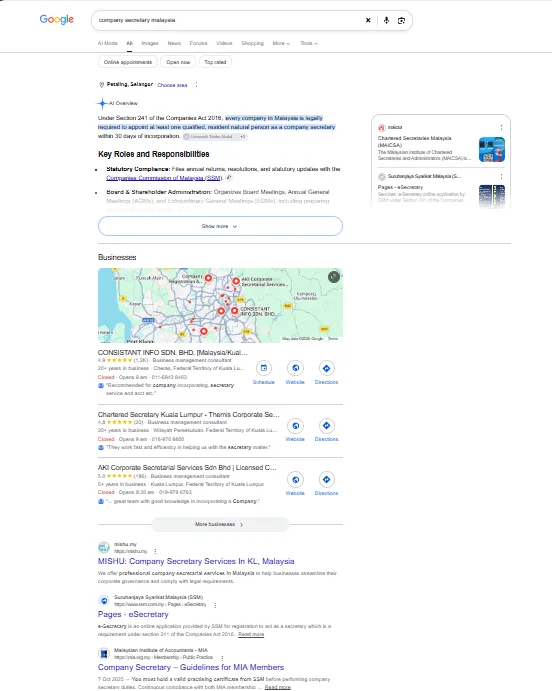
Our homepage is #1 for ‘company secretary Malaysia’.
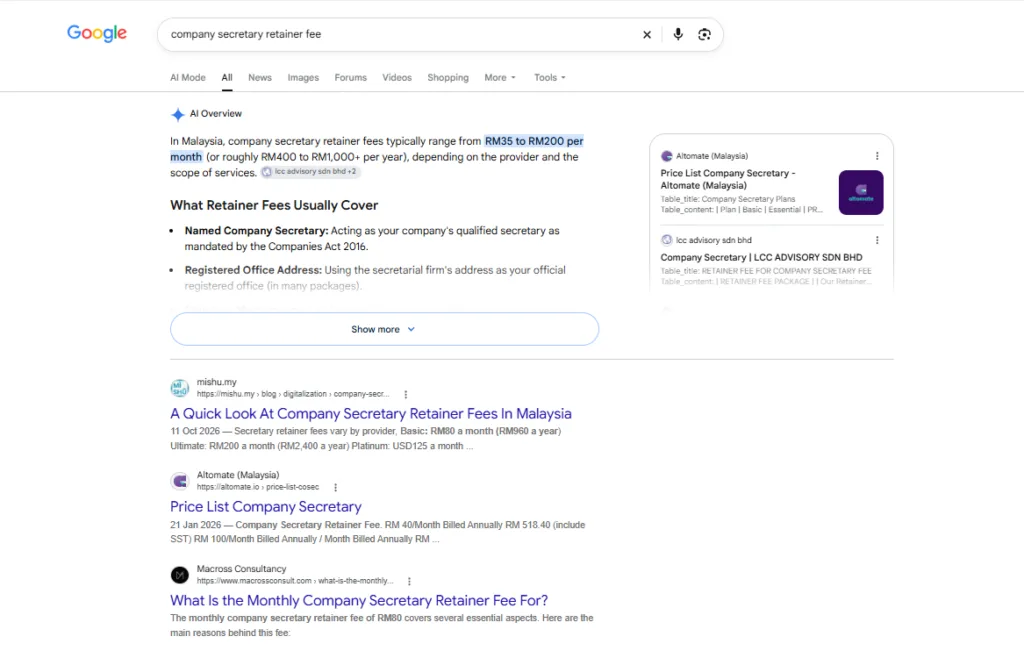
Our guide to company secretary retainer fees is #1 for ‘company secretary retainer fee’.
And our MOF license application service page is #5 for ‘MOF license Malaysia’.
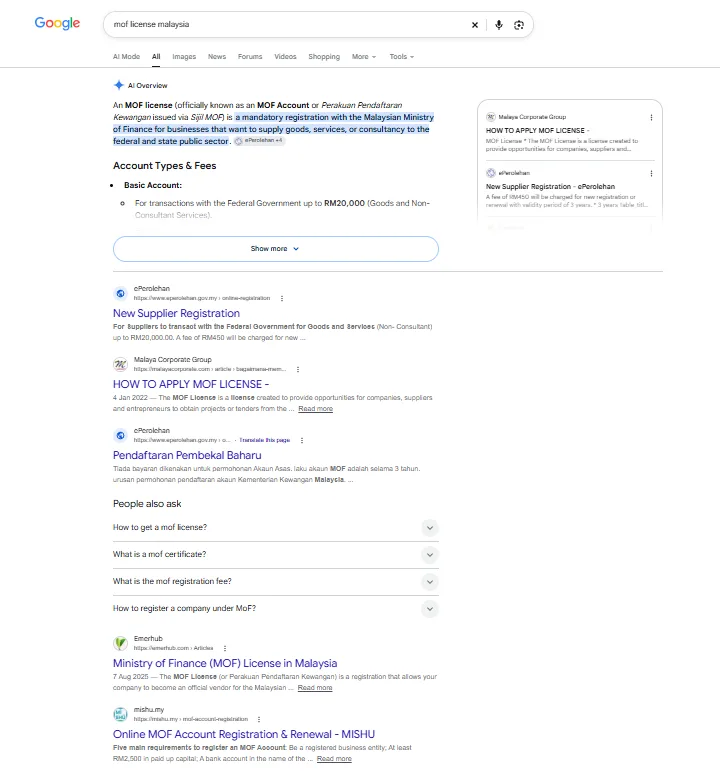
What are we trying to show here? That as we said, every page is judged separately
Always remember search engines rank pages, not websites – each page on your site gets evaluated for its own relevance and its own authority for a specific search term.
For ‘company secretary Malaysia’, Google decided our homepage was more relevant than our retainer fee guide, since the homepage is about our company secretary services as a whole.
For ‘company secretary retainer fee’, it’s the other way round for the same reason.
And in both cases, our pages had enough authority to beat everyone else’s.
Our MOF license service page is a different story. Google decided it was our most relevant page for ‘MOF license Malaysia’, fair enough, but four pages from other websites had more authority than ours. So we’re stuck at #5 (for now, just you wait).
And now we arrive at the most important takeaway of this whole guide.
SEO is relevance + authority
That’s all. Relevance and authority. That’s all SEO ever was and ever will be.
The only thing that sits outside of this is technical SEO, which is stuff like how fast your pages load. It won’t make your page more relevant or authoritative, but if broken, all the relevance and authority in the world won’t matter. We’ll touch on it briefly later.
Other than that, every SEO tactic is just a way of improving relevance or authority.
Remember this and you already know more about SEO than 99% of marketing agencies, and you’ll be able to tell whether you’re dealing with a credible provider or if they’re just hantaming.
That said, the next sections dig into relevance, which is the easy one, and authority, which is much harder (and for that reason makes a bigger difference).
Establishing page relevance for SEO
Relevance is whether the content on a page is likely to answer what the searcher wants, which SEO folks call search intent. The closer a page’s content matches search intent, the more relevant it is, and vice versa.

Back to our examples!
Google decided that someone searching ‘company secretary Malaysia’ was most likely looking for a company secretary to hire, so it showed them our homepage.
Someone searching ‘company secretary retainer fee’, on the other hand, probably wanted to know how much it costs, so Google showed them pages about pricing, ours included.
We build different pages to answer the different search intents that matter to us, which requires us to understand keywords.
Keywords
A keyword is whatever someone types into a search engine or asks an AI. They can be long, short, general, specific, and have different levels of buying intent, for example:
- someone searching ‘company secretary’ is most likely just curious
- someone searching ‘company secretary fee Malaysia’ is more likely looking to hire one
- someone searching ‘company secretary KL’ likely wants to hire one based in KL
To the MISHU marketing team, all three are valuable search intents and keywords, but the second and third are much more important to us, so those are the ones we prioritise.
That’s how you should approach keywords – never just assume what your customers are searching for. Instead, find out exactly what they are typing first, then build pages that answer it.
This is called keyword research, and we explain it later in the how-to section.
And that’s relevance. Now for the hard part.
Establishing authority for SEO
Authority is how credible and trustworthy a particular page is, assuming it satisfies relevance.

Let’s go back to our MOF license page sitting at #5.
For the sake of argument, let’s say it’s just as relevant as every other result on that page, including the one above it and the one below it. Honestly, it probably is – providers more or less say the same things on our pages:
- what an MOF license is
- requirements
- pricing
- yada yada
None of the pages will be that different since they’re all about the same government license, and they all answer the same search intents equally well.
But Google still has to rank them somehow – and in a way that is reliable.
And this method has to reliably work for EVERY SEARCH IN THE WORLD!
That’s where authority comes in, and where the main way to establish relevance is with keywords, the main way to establish authority is through backlinks.
Backlinks
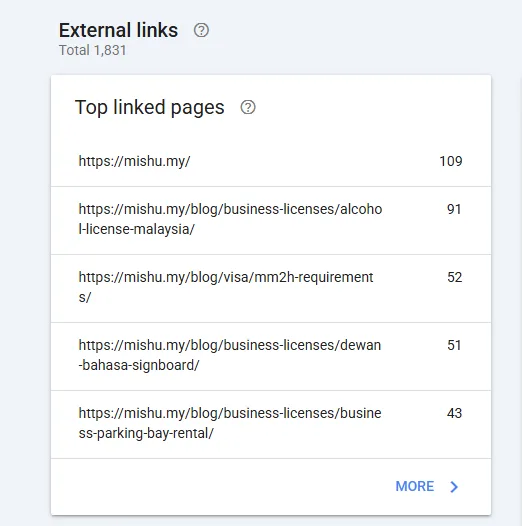
A backlink is when another website links to a page on yours. If a news site writes about MOF licenses and links to our MOF license page, that’s a backlink.
You can see who’s linking to you in your Google Search Console links report – here’s ours.
Remember our example about asking a friend to recommend an accountant earlier?
Same thing, but for websites.
Search engines see backlinks as votes of confidence. If other websites are willing to send their own readers your way, your page is probably worth trusting.
Backlinks are also why authority is so much harder – relevance is entirely up to you since you decide what goes on your pages, but backlinks depend on other people deciding to link to you, so you need to give them a good reason to.
So what makes one backlink better than another?
What makes a backlink valuable
Most pages on a website don’t have a single backlink, and that works in your favour.
Just one good backlink can be enough to push a page to the top, since chances are its competitors don’t have any.
Go through your own Links report and you’ll notice the pages that do have some tend to rank better on average than the ones that don’t.
Also, there’s no such thing as a bad backlink – at worst, it does nothing.
However, one backlink can absolutely be more valuable than another – just like a recommendation from one friend can be more trustworthy than another.
It mostly comes down to three things:
- the authority of the page linking to you, which is how many backlinks that page has itself
- the anchor text, meaning the clickable words in the link
- how closely related the linking page’s niche is to yours
The first one is like a chain of trust. A link from a page that lots of other sites link to passes on way more authority than a link from a page nobody’s heard of.
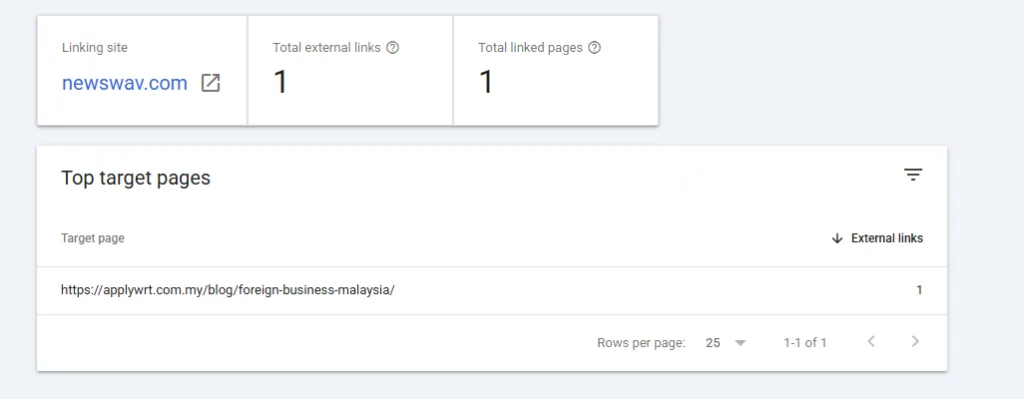
The second one tells search engines what your page is about. A link to our MOF license page that says ‘MOF license application’ is much more useful than one that just says ‘click here’.
The third one is just like recommendations in real life. If you need an accountant, a recommendation from a fellow business owner counts for more than one from your barber. Same goes for links. A link to our MOF license page from a site about government procurement counts for more than one from a food blog, even if both sites have the same authority.

There are other factors too, but these three are the big ones.
Getting backlinks is one of the hardest parts of SEO, and without them, your page might be perfectly relevant, but stuck on the second page and nobody sees it.
Now we’ve covered authority, which is the hard part.
Now time for the harder part – putting it all into practice!
How to do SEO for your business
These are the things that have made the biggest difference for us over the past six years.
You don’t need to be technical for any of them, and most of them really just come down to understanding your customers better than your competitors do.
Don’t sweat technical SEO
Technical SEO is where a lot of marketing agencies waste more time than they need to.
Unless your site takes 10 minutes to load or has 20 million pages, Google will find and index it just fine. The only thing worth doing is checking Search Console every now and then to make sure your pages are actually getting indexed.
Anything beyond that is time you’re not spending on relevance and authority, which are the things that actually get you ranked.
Do proper keyword research & understand your industry
This is where you find out what people are actually searching for. Skip it, and you’re working blind, which is how you end up with pages that nobody reads or visits because nobody was searching for them in the first place.
Before the tools, though, you need to understand your industry.
If you’re the business owner and you know your stuff, this may be easy. But if you’re hiring a marketer or an agency, they won’t know your industry the way you do, and it’s on you to get them there.
They know marketing. You need to help them understand what they’re marketing.
Once that’s sorted, these three free tools are more than enough to get started:
- Google Keyword Planner, which comes with Google Ads
- Ahrefs, whose free tools estimate search volume and keywords other pages rank for
- Google Search Console or Bing Webmaster show which searches your own website is already showing up for
The free versions of Keyword Planner and Ahrefs have their limits, but they’ll give you plenty to work with for your first few pages.
Using Google Keyword Planner
We’ll walk you through this with an example of MISHU’s own core service, which is to help people register businesses in Malaysia. One of the things they’ll ask at the start of their decision journey is whether to go with an enterprise or a Sdn Bhd.
But that’s an assumption – to confirm, we open Keyword Planner and search ‘enterprise vs Sdn Bhd’.
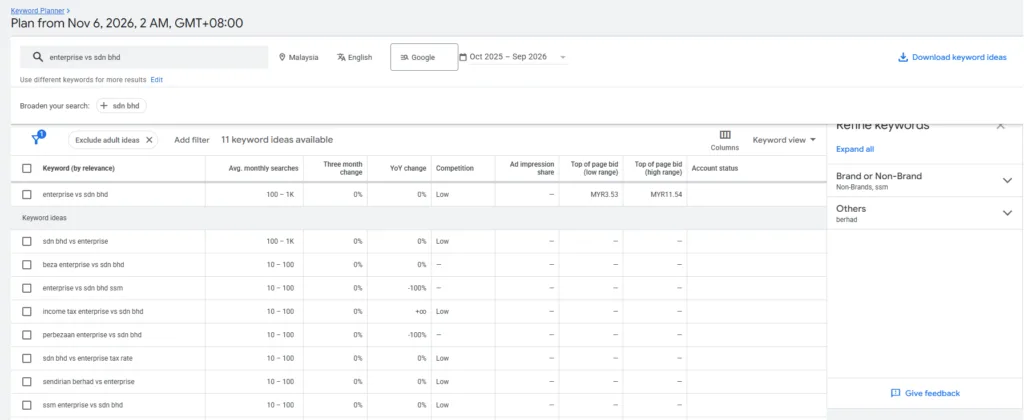
Turns out people do search for this – you’ll also see related searches and their volumes. That’s a good sign a page comparing the two is worth writing.
To better understand what such a page should include, we look at what’s already ranking.
Researching ranking competitors
Google something your customers are likely to search for, then run the top result through Ahrefs to see which keywords it ranks for and how many searches each one gets.
For ‘enterprise vs Sdn Bhd’, Foundingbird comes out on top.
We run their page through Ahrefs and see all the different ways people phrase that search plus the search volume for each.
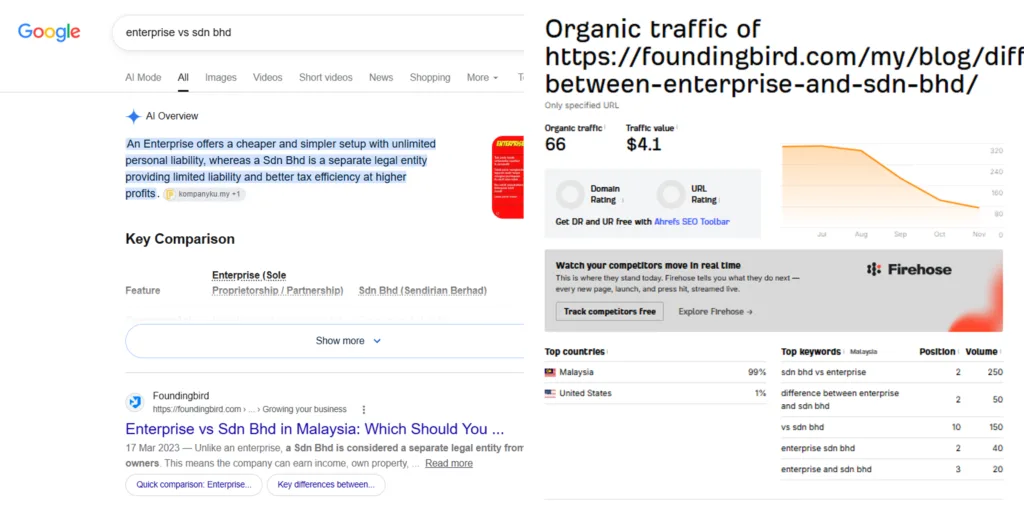
This is good because it confirms the exact words our customers use, and sometimes it will show extra related keywords we can include in our page.
And once your own page has been up for a while, you’ll have a third source of keywords: your own data.
Using your own search data
Google Search Console and Bing Webmaster Tools are both free and show you which searches your pages are already showing up for, how often, and how many people click through.
They’ll often show you searches you never even meant to target, which makes them great for improving existing pages and coming up with new ones.
If you haven’t set them up yet, go do it now. It’s literally a five-minute click-click job, and they only start collecting data once your site is verified, so the sooner the better.
We published our guide comparing Enterprises to Sdn Bhds ages ago, so Search Console now shows us exactly what people have been searching to find them.
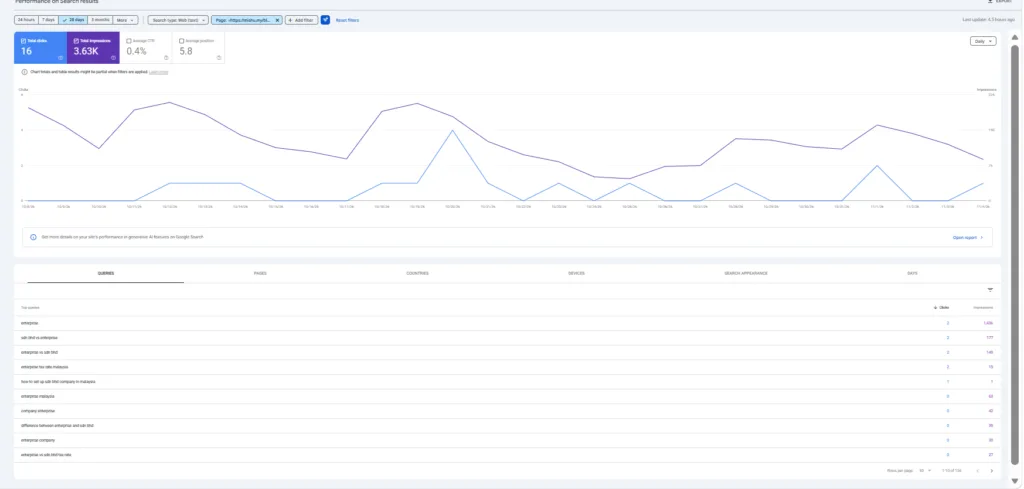
This shows us we’re not doing too well for this – and whether we decide to put in the work to improve it depends on the commercial value of such a keyword.
One thing that kept coming up was how the tax rates compare. So instead of cramming that into our existing guides, we zoomed in on it and wrote a dedicated guide comparing enterprise and Sdn Bhd tax rates on our sister site, which now ranks #3 on Google.
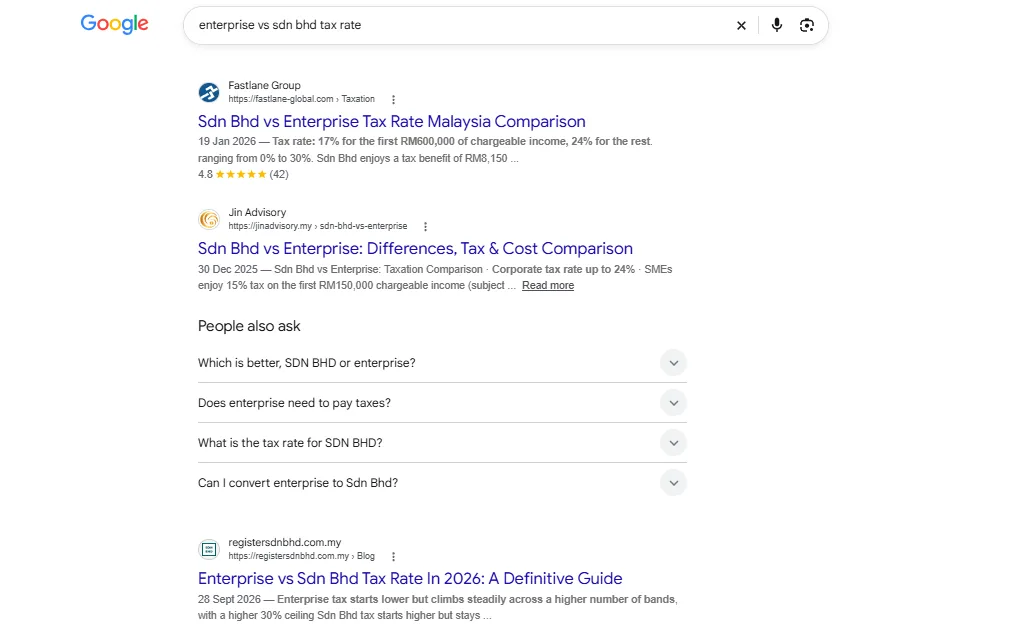
But unless you’re a one man team who knows everything, keywords alone are just half the story.
Run your keywords past the sales team
Not all keywords are equally valuable. In fact some are commercially worthless, while others are commercially priceless.
The tools tell you what people are searching for, but not who’s searching, or whether they’re ever going to become a paying client.
At MISHU, marketing runs keywords past our operations and sales teams.
We can see what people are searching for, but they know what kind of people were doing the searching.
They can also tell us which keywords are worth more or less based on pricing and how likely those leads were to close, and we can prioritise our content around that.
We got it wrong a few times too, when we saw a keyword with high search volume, then pandai-pandai gave it a shot without checking with anyone, and ended up swamping our sales team with irrelevant leads. Oops.
Marketing can eventually get a lot more independent, but at the start this is crucial. Once you know which keywords are worth going after, it’s time to put them on your pages.
Keep keywords in titles and headings simple
Every page should have a focus keyword, meaning the main search you want it to rank for. Make sure it’s in the page title and headings.
If you’ve done your keyword homework, it’s kind of impossible for this not to happen.
A page written to answer ‘enterprise vs Sdn Bhd’ is going to have those words in its title and headings, because that’s what it’s about.
Don’t stress over variations like ‘enterprise vs Sdn Bhd’ versus ‘Sdn Bhd vs enterprise’, whether the keyword goes at the start or end of your title, or how many times it shows up on the page.
Just make sure it’s there, then focus on properly answering the search intent behind it.
What you should do is ensure each search intent your page answers has a suitable keyword.
Say our MOF license guide was going after searches about both pricing and requirements.
We’d make sure it had a section for each, with headings that include keywords like ‘MOF license fee’ and ‘MOF license requirements’, then go into as much detail as each one needs.
And if one of those sections has enough searches behind it, it might deserve a page all to itself.
Give subtopics a dedicated page when it makes sense
For example, we started with an overall guide to CIDB license applications.
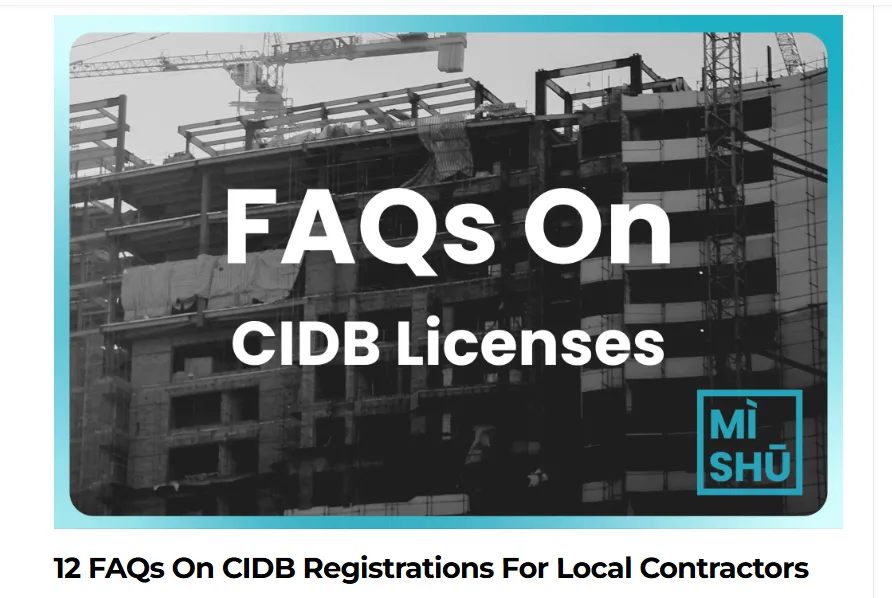
As part of this guide, we briefly addressed CIDB grades…then we noticed a lot of people were searching specifically about CIDB grades, so we wrote a guide just for that too.

Then we noticed each of the seven CIDB grades had decent search volume on its own, so each grade got its own guide too – here’s our G7 guide ranking #2 on Google.
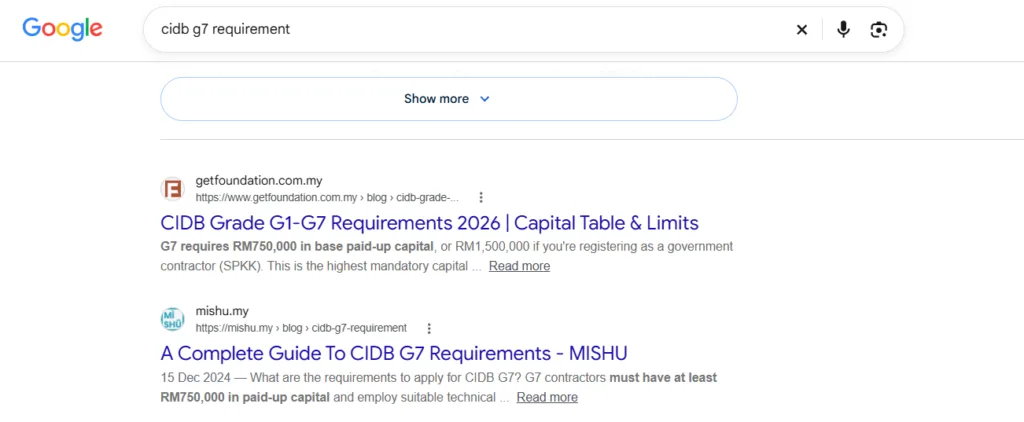
Each page is much more relevant to its own search, and together they bring in way more clicks and conversions than one big CIDB guide trying to cover all of those keywords ever could.
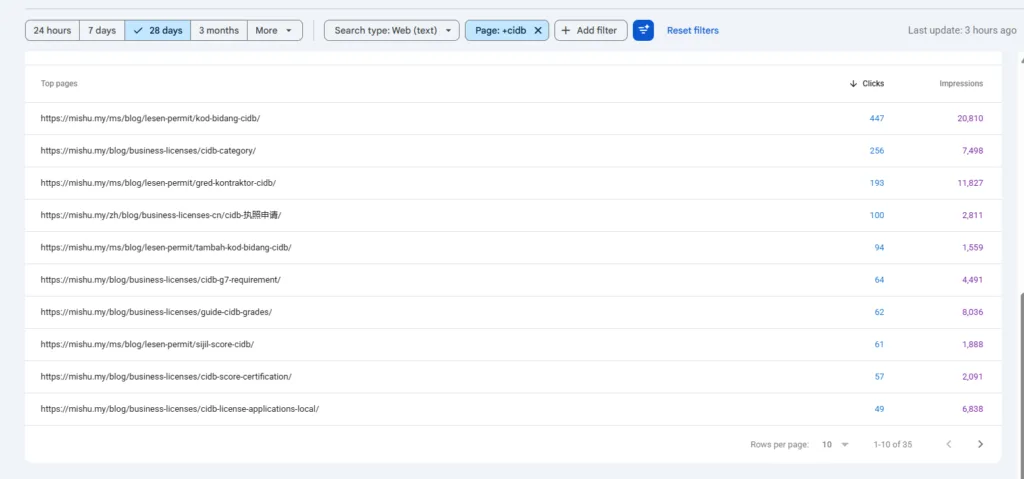
That said, subtopics always get fewer searches than the main topic, so the risk is you spend ages trying to rank for small searches when you could be moving on to bigger ones.
So a subtopic must always justify its own page via search volume or how valuable it is to you.
One of the most common ways a topic splits up is by location, which is worth a step of its own.
Target location-specific searches (local SEO)
Lots of people add a location to their searches, like ‘Sdn Bhd registration Kuala Lumpur’.
To a search engine, those are different from ‘Sdn Bhd registration Malaysia’, and a page specifically about that location is more relevant than a general one – this is known as local SEO.
We see exactly this in our own Search Console, with people searching for company incorporation in Johor, Kuala Lumpur, Puchong and Penang.
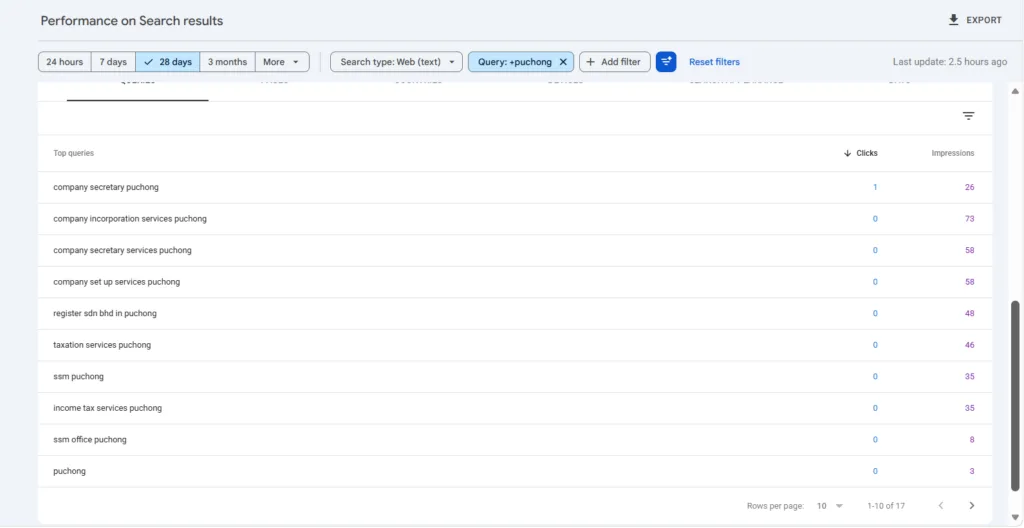
Since you can register a Sdn Bhd in Malaysia online and we offer PBT license application services for these locations, all of these keywords are highly relevant.
Naturally, we’ve written a guide for each area on how to register and set up a business there, and all four have produced leads from people looking to incorporate a company in those areas.
Important: We didn’t just copy and paste the same guide – our location-specific guides always have location-specific notes – check a couple of them out for reference:
You should approach location-based repurposing the same way – add genuine value that justifies why a specific location-based search deserves its own page.
And if you’ve got customers in specific locations, there’s one more free thing you should do.
Google Business Profile optimisation (also local SEO)
We’ll keep this one short – if your business has a physical office, set up a free Google Business Profile.
It’s what powers those map results Google shows for local searches, which often show up above everything else. Keep it simple:
- list all your services
- make sure your address and opening hours are right
- add as many photos as you can, and
- if you’re comfortable, add pricing
Where your customers are matters, but so does the language they search in.
Write in the languages your customers search in
Someone searching ‘company registration Malaysia’ and someone searching ‘pendaftaran syarikat Malaysia’ want the same thing.
To a search engine, they’re two different searches with two different sets of results.
That’s why MISHU’s site is in three languages: English, Bahasa Malaysia and Mandarin.
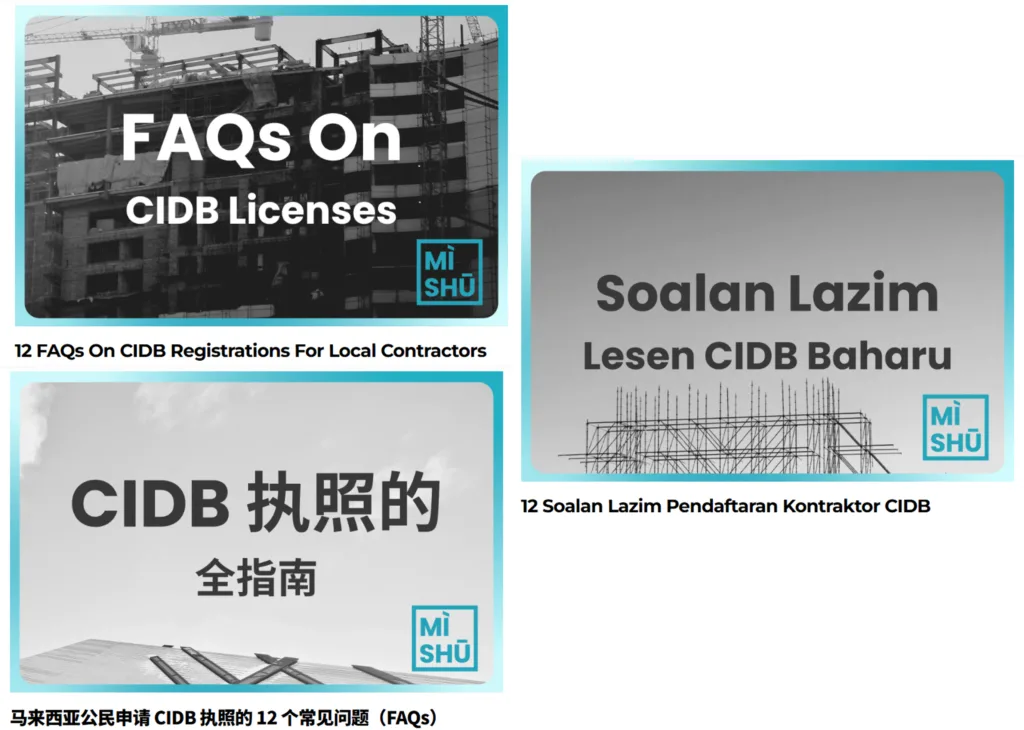
It’s also why a lot of our visa pages are in Japanese and Korean – many foreigners looking to live and work here search in their own language first.
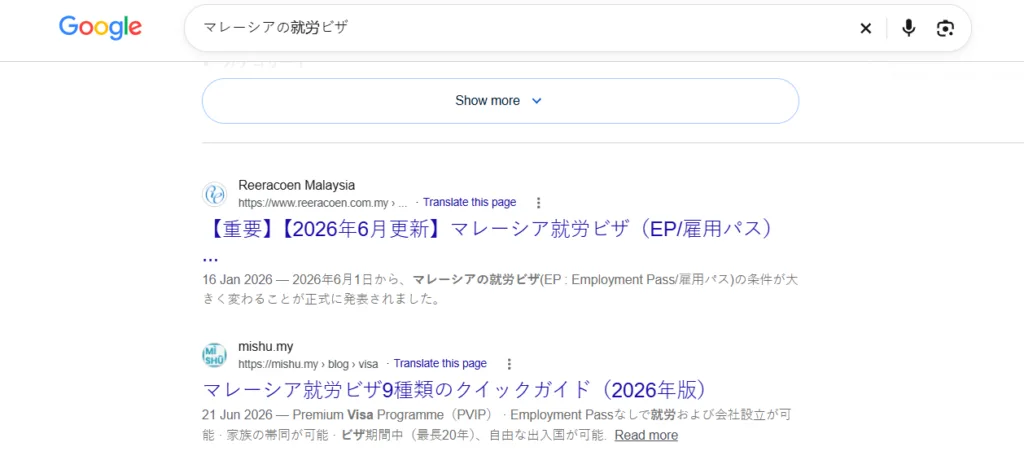
The languages your site should exist in depends on your target customers, but in Malaysia, a site in just one language is likely missing out on searches in at least two others.
Prioritise bottom-of-funnel keywords
Top of the funnel keywords are searches made by people who are just starting to look into a topic, nowhere near ready to buy.
They’re tempting because they often have huge search volumes, but there’s a reason for that: lots of non-serious searchers are looking them up.
For example, MISHU has a guide to small business ideas that ranks decently well, and which we don’t really put that much effort into updating.
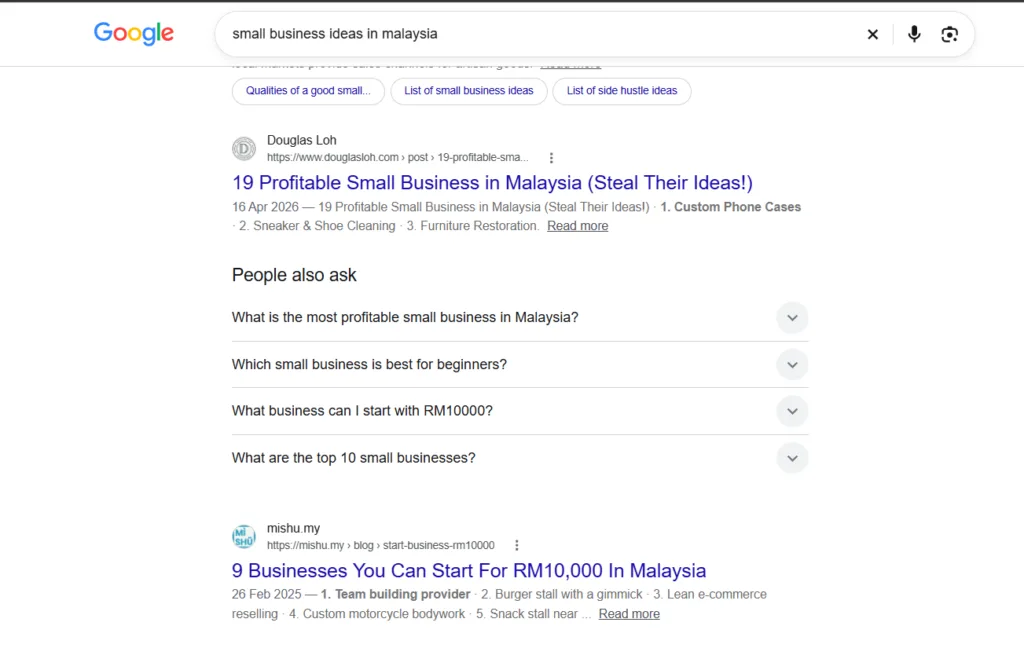
It was written in response to the rubbish alternatives we saw online, and it gets decent traffic.
But for lead generation, it’s not worth much because most people searching for business ideas are not at the stage of registering a company, let alone hiring a company secretary.
On top of that, a lot of information-based searches get answered directly by Google’s AI Overviews or inside ChatGPT, so the searcher never needs to click into your site.
Compare that to a search like ‘DBKL license runner’ – we know someone searching this specifically wants to hire a service provider to handle their license application for them.
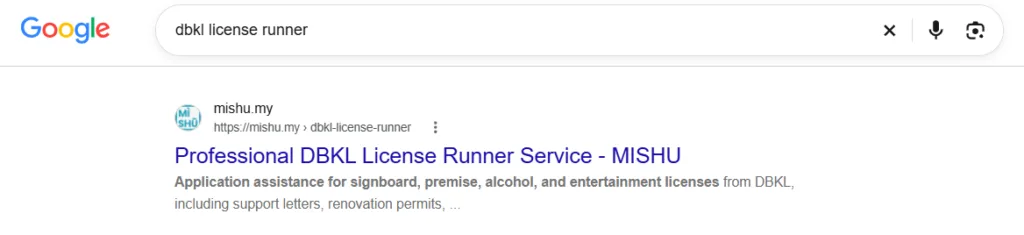
It gets far fewer searches, but it’s significantly more valuable to us – it’s a bottom of funnel search term. And since that person is looking for someone to hire, AI is less likely to stop them from clicking through.
Our license runner page gets 1/4 of the traffic the business ideas guide but brings in hundreds more leads.
This doesn’t mean you should never write top of the funnel content, but make sure you prioritise ranking for keywords that bring in people ready to buy.
Consider dedicated sister sites
This one is more advanced and needs a lot of work, but it can pay off big time.
In our experience, a domain name that exactly matches a keyword seems to help with rankings. It’s kind of like a more complicated version of giving subtopics their own page.
Here, you give each service its own domain – whether that’s part of relevance or its own separate thing we don’t know, but we’ve seen it too often to ignore it.
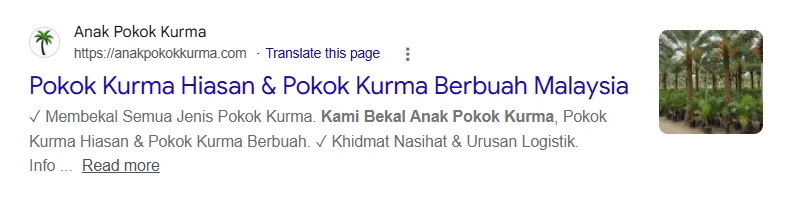
For example, when we were researching CIDB keywords, we noticed daftarcidb, renewcidb and kadhijau were all separate websites owned by the same company, each focusing on a specific CIDB niche, and each one ranked just below the official government pages for that niche.
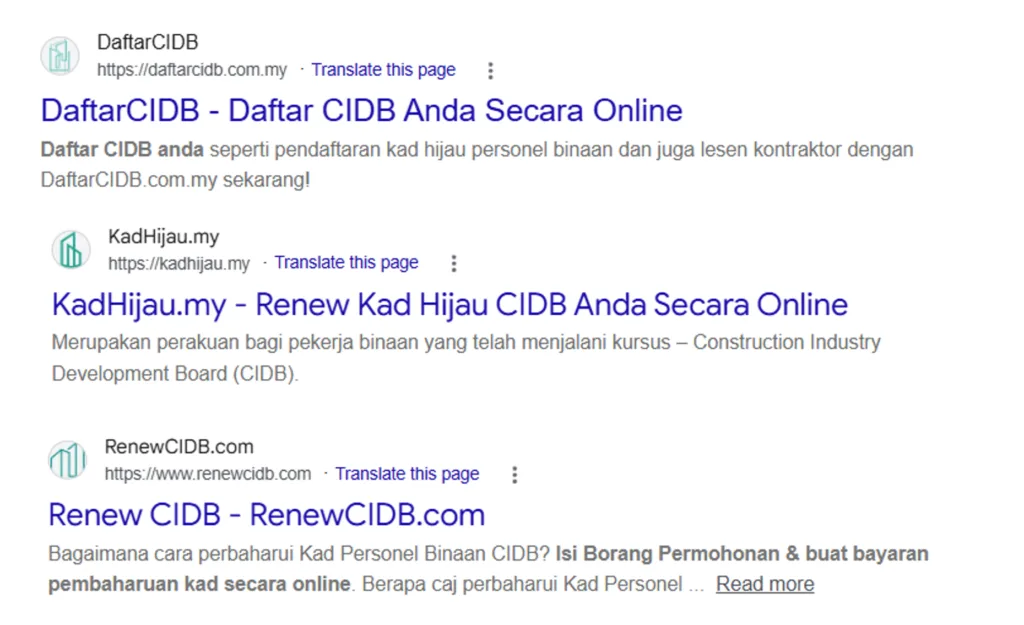
We kept seeing this pattern, so eventually we tried it ourselves. Today we have several sister sites, each focused on one of our services:
- mypvp.com.my for Professional Visit Passes
- myemploymentpass.com.my for Employment Passes
- applylesenpbt.com.my for PBT licenses
- applywrt.com.my for WRT and USS licenses
- mm2hkl.com.my for MM2H applications in Kuala Lumpur
- register-sdn-bhd.com.my for Sdn Bhd registration
Since each site is about one service, it does a better job for leads looking for it than our main site. Where it makes sense, the sites link to each other so visitors can easily hop between services.
Partner with businesses and SEO practitioners
The best backlinks come from relationships with other businesses whose customers overlap with yours, where linking to each other actually helps both of you.
For example, we linked up with our Singaporean counterparts who incorporate companies over the causeway, with a guest post for their site sharing information, and they wrote a guest post for ours.
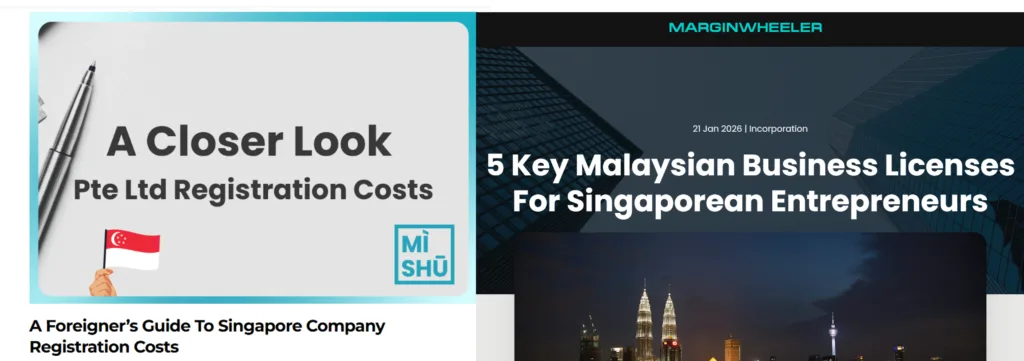
You can see the two guides here for a better idea of the collaboration:
- Malaysian business licenses for Singaporean entrepreneurs
- foreigner’s guide To Singapore company registration costs
Margin Wheeler helps expand MISHU’s reach to a Singaporean audience, while MISHU helps expand Margin Wheeler’s reach to a Malaysian audience.
Win win for both of us, and for Malaysians and Singaporeans looking to expand overseas.
Social media can help with SEO
Facebook, Reddit and other big platforms have huge authority, way more than any SME website will ever have.
Posts on these platforms can rank really well on search engines, sometimes even above the businesses’ own websites, and it happens all the time.
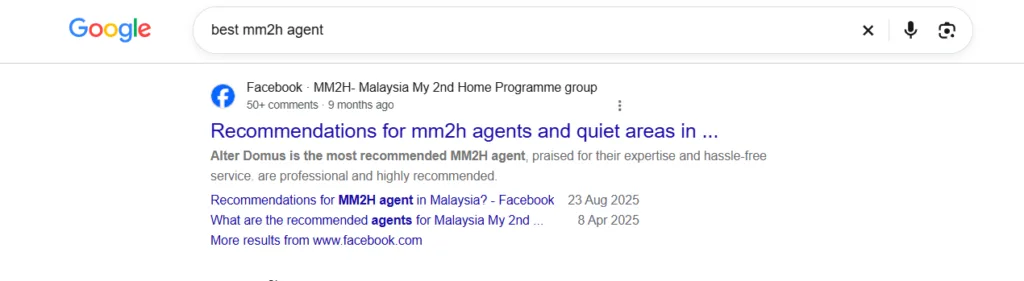
So posting genuinely useful stuff on these platforms, especially in groups and communities where your customers hang out and ask questions, is a way to show up in search results even for keywords your own site can’t rank for yet.
And of course, social media can be a source of direct conversion, not just for indirect SEO.
Don’t ignore Bing Webmaster Tools
Most businesses never think about Bing, including us for the first five years. We are only now learning that this was a mistake and we are fixing it!
Google has way more search volume, but we’ve found time and time again that Search Console just doesn’t show search queries in as much detail as Bing Webmaster Tools does.
For example, if we check keywords for our long-term visa listicle on GSC, this is what we get.
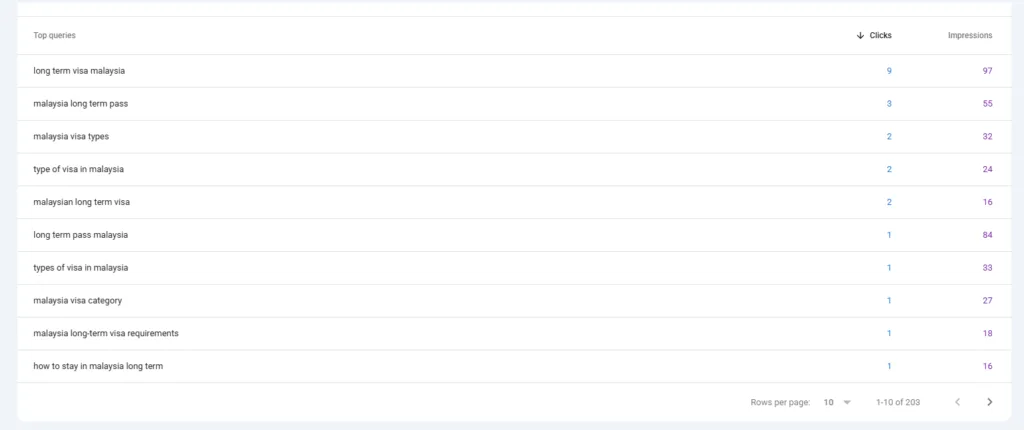
Meanwhile, on Bing Webmaster, we can see far more detailed and granular searches.
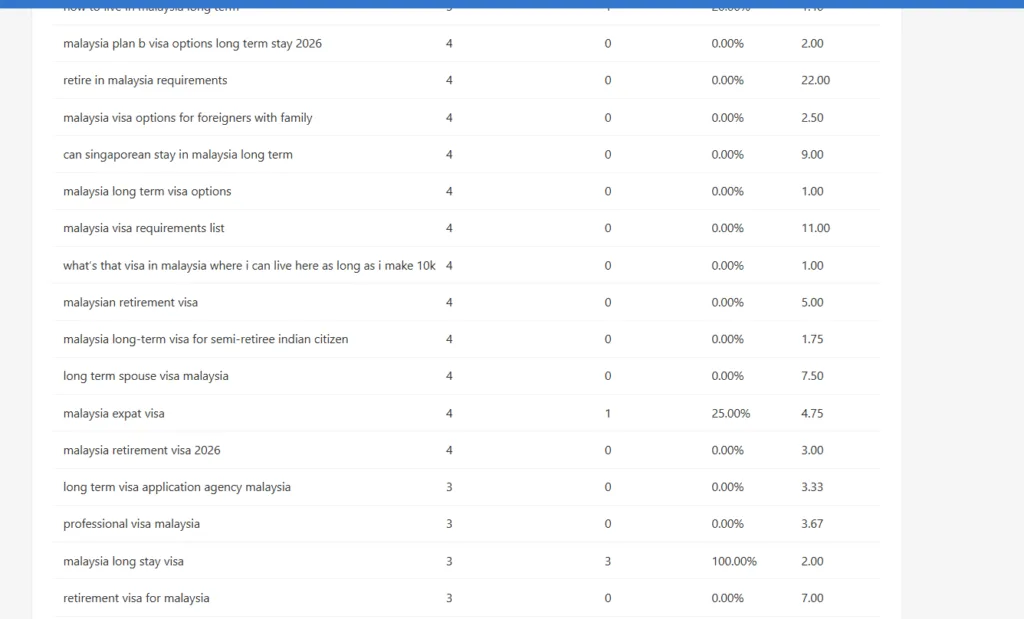
Google hides a lot of less common searches for privacy reasons, but Bing will show you the exact phrasing people use, and these searches are almost definitely happening on Google too.
This means using Bing’s queries when planning and revising your content actually helps you target Google searches better too.
There’s one more reason. ChatGPT relies heavily on Bing’s results when it searches the web.
So by paying attention to this one platform, you’re improving your relevance on three: Bing, Google and ChatGPT.
Don’t overlook image search
Image search is seriously underrated. Plenty of people search for them directly, and images on your pages can rank there just like the pages themselves.
You can see which image searches you’re showing up for in Google Search Console. Just open the Performance report and switch the search type to Image.
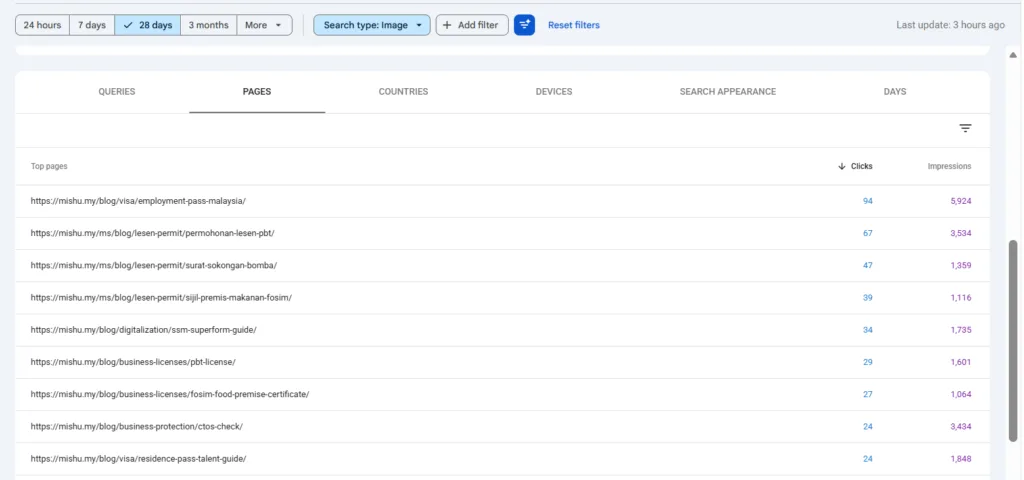
From there, treat it like normal keyword research.
For example, we noticed people love looking up samples of licenses and visas, so they know what the real thing looks like before they apply.
That’s why many of our license and visa guides come with pictures of licenses and visas we’ve helped get.
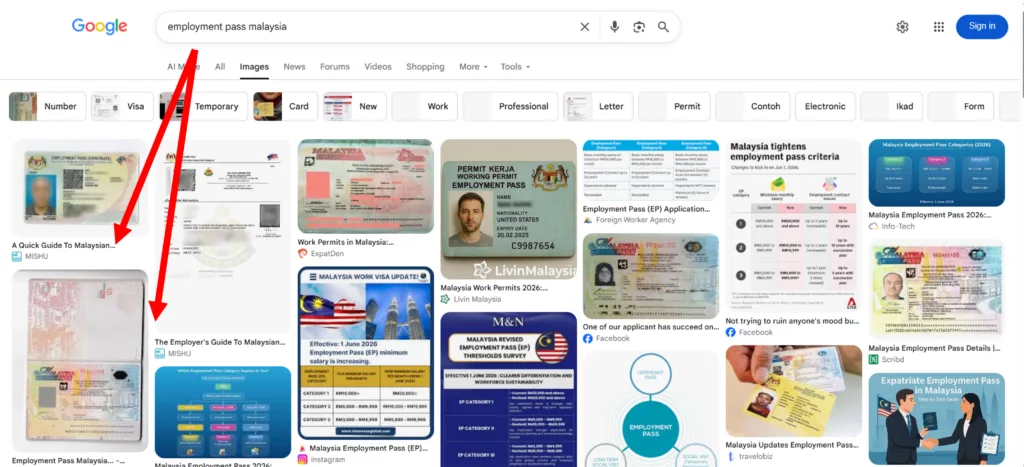
Just make sure you include the keyword in each image’s alt text, which is the short description attached to an image that tells search engines what’s in it.
So a picture of a sample MOF license should have alt text along the lines of ‘sample MOF license Malaysia’, not ‘IMG_4821’.
In fact, if you were to check every single image we’ve used in this guide, they all contain relevant descriptive alt text.
And to help you work through all this data, there’s one more tool worth paying for.
Use a paid AI plan
In case it isn’t obvious, we wrote this guide with the help of AI and have been writing with AI for years.
Search engines have no problem with AI-generated content. Whether a person or an AI wrote a page has nothing to do with its relevance or authority, and content doesn’t get penalised just for being AI.
What does get penalised is pumping out loads of low-quality pages just to rank, whoever wrote them (which Google calls scaled content abuse).
You’re almost certainly going to use AI too, and a paid version of ChatGPT or Claude can help a ton with:
- compiling and analysing keywords from your research tools
- drafting sections of your pages and guides
- pulling information out of long documents
- checking your guides for gaps
If you’ve only been using the free versions, you just don’t know what you’re missing out on.
You should still go through everything yourself and fix it so it doesn’t sound like a robot wrote it, but that’s more of a reader UX thing than an SEO thing, since nobody enjoys reading something that’s obviously AI-generated.
So humanise your drafts, and tell the AI where to add more detail, especially your own examples and experience, since that’s the one thing it can’t make up for you.
We didn’t just give Claude a prompt and publish the first thing it gave us. We spent hours going back and forth with it, telling it how to refine our ideas.
And the final version was fully edited by a human, which is why none of the jokes are any good.
We’re confident we could’ve written something just as good on our own eventually, but instead of two weeks of sleepless nights, it took us just one sleepless night…and a few million tokens 🙂
Track results by leads and conversions
Traffic is easy to measure, but it doesn’t pay the bills. A page that brings in 1,000 visitors and zero enquiries is worth less than one that brings in 50 visitors and three paying clients.
Remember our high volume, low value keyword mistake? We did that twice; one time too many!
The only way to know which pages bring in leads worth having is for marketing and sales to align on which pages enquiries came from and which of those enquiries actually became clients.
Then put more effort into the pages and keywords that pay off, and less into the ones that don’t.
That’s why marketing and sales need to work together if you want to get the most out of SEO.
Which leaves one last thing: AI search.
What about AI search?
More and more people are asking ChatGPT or Claude for recommendations instead of Googling, and our stance, and the stance of SEO sources we trust, is that there’s no real difference between ranking on a search engine and getting mentioned by AI.
When you ask an AI something that needs current information, it doesn’t just magically know – it runs a search on a search engine, reads the top results and summarises them for you.
Specifically, it uses what’s called a query fan-out where it breaks up a search into several possible search intents, searches for them, and gives you a summary.
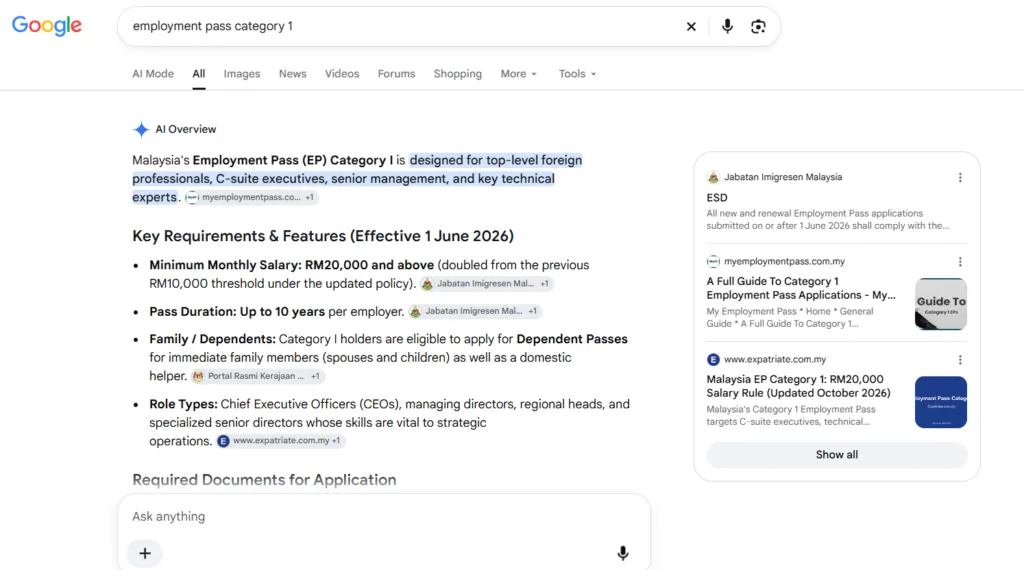
In other words, when you search with Gemini, it’s just a super-powered Google search, while as we mentioned earlier, ChatGPT leans heavily on Bing for this.
When an AI answers without searching, it goes off what it learned from the web during training, which also leans towards pages that were most prominent and most linked to.
Either way, pages that get mentioned are…you guessed it: Ones with relevance and authority.
So if someone gave us the job of ranking well with AI, we’d treat it like any other SEO project. Find out what people are asking, publish pages that answer it better than anyone else, and earn the backlinks that make search engines trust them.
What about GEO and AEO?
You might have come across agencies selling GEO (generative engine optimisation) or AEO (answer engine optimisation) packages that promise to get you mentioned in AI answers.
Ask them exactly what they do. Everything they describe will be the same as an SEO plan:
- keyword research
- content that answers questions clearly
- getting mentioned by other sites
All relevance and authority. New name, same work.
That’s all SEO ever was and ever will be, whether it’s a person doing the searching or an AI.
Our final note: Always test things yourself!
Every SEO agency we worked with gave us the same generic services without ever taking the time to properly understand our business, and once we started doing our own SEO more actively, we realised their recommendations ranged from useless to minimally helpful at best.
So we went full steam ahead with in-house SEO, and we’ve never looked back.
It’s no surprise an agency juggling clients will never know your business, customers and services the way your own team does. But you’d be surprised at just how big that gap is.
We wrote this guide to help Malaysian businesses from going through the same thing, and to encourage anyone willing to give it a go to try doing SEO properly themselves.
While we strongly recommend our steps, since that’s what we did, it’s important for you to test it for your own business and see if it works – double down on what does, discard what doesn’t.
That’s it from us, and all the best with your SEO efforts 🙂
Let MISHU be your Company Secretary

On top of Company Secretary services, MISHU offers a comprehensive suite of business solutions including everything from accounting to HR and business licensing. If you’re an SME looking for a one-stop Company Secretary in Malaysia, MISHU may well be your best choice.